Pakistan’s Prison Population Reaches 110,513 as Three in Four Prisoners Await Trial
 0
0
 0
0
Pakistan Prison Crisis: 7 Alarming Findings in the 2026 Report
Pakistan’s prison crisis has exposed serious weaknesses in the country’s criminal justice system, with overcrowded jails, prolonged pre-trial detention and increasing drug-related imprisonment placing enormous pressure on correctional facilities. According to the Annual Prisons Data Report 2026, published by the National Commission for Human Rights (NCHR) and Justice Project Pakistan (JPP), with support from the European Union, 110,513 people are currently behind bars across the country.
The report highlights a troubling reality: imprisonment is increasingly affecting people who have not been convicted, while delays in court proceedings and limited access to alternatives continue to undermine efforts to improve the justice system.
Pakistan Prison Crisis: 7 Key Findings From the 2026 Report
1. Prisons Operating Beyond Authorised Capacity
Pakistan’s prisons are operating at 160.6% of their authorised capacity. Facilities designed to accommodate approximately 68,832 people are currently holding 110,513 prisoners, leaving the system overcrowded by 41,681 people.
This level of overcrowding puts additional pressure on prison infrastructure, healthcare services and basic living conditions, making effective prison management increasingly difficult.
2. Three in Four Prisoners Are Under-Trial
One of the most concerning findings is the high number of people awaiting trial. The report states that 82,988 prisoners, representing 75.09% of the national prison population, are under-trial.
This figure exceeds the total authorised capacity of Pakistan’s prisons by 14,156 people. Prolonged detention before conviction raises concerns about access to bail, delays in court proceedings and the ability of accused individuals to secure timely justice.
3. Drug Laws Contribute to Prison Population Growth
Drug-related offences are another major contributor to the Pakistan prison crisis. More than 28,000 people are imprisoned under the Control of Narcotic Substances Act (CNSA), accounting for more than one-quarter of the total prison population.
The report records a 43.4% increase in this category since 2023, highlighting the growing impact of drug-related imprisonment on already overcrowded facilities.
4. Prison Population Trends Differ Across Provinces
The report indicates that overcrowding is not inevitable. Punjab and Sindh continue to face significant prison population pressures, while Khyber Pakhtunkhwa and Balochistan have reduced their prison populations and remain within their overall authorised capacity.
Greater use of probation, parole, diversion and other alternatives to imprisonment has contributed to this progress, offering potential lessons for broader criminal justice reform.
5. Women and Children Face Particular Challenges
Women and children remain vulnerable groups within the prison system. The number of women in prison has increased by 45.96% since 2024, while 86.2% of children held in prisons are under-trial.
These figures highlight the importance of timely case reviews, appropriate safeguards and alternatives to detention, particularly for people whose circumstances require additional protection.
6. Death-Row Population Shows a Decline
The report also records a reduction in Pakistan’s death-row population. The number of prisoners awaiting execution has fallen to 3,220, representing an 11.7% decline from 2024.
Although this marks a notable change, the wider challenges of prison overcrowding and prolonged detention remain unresolved.
7. Authorities Call for Practical Criminal Justice Reform
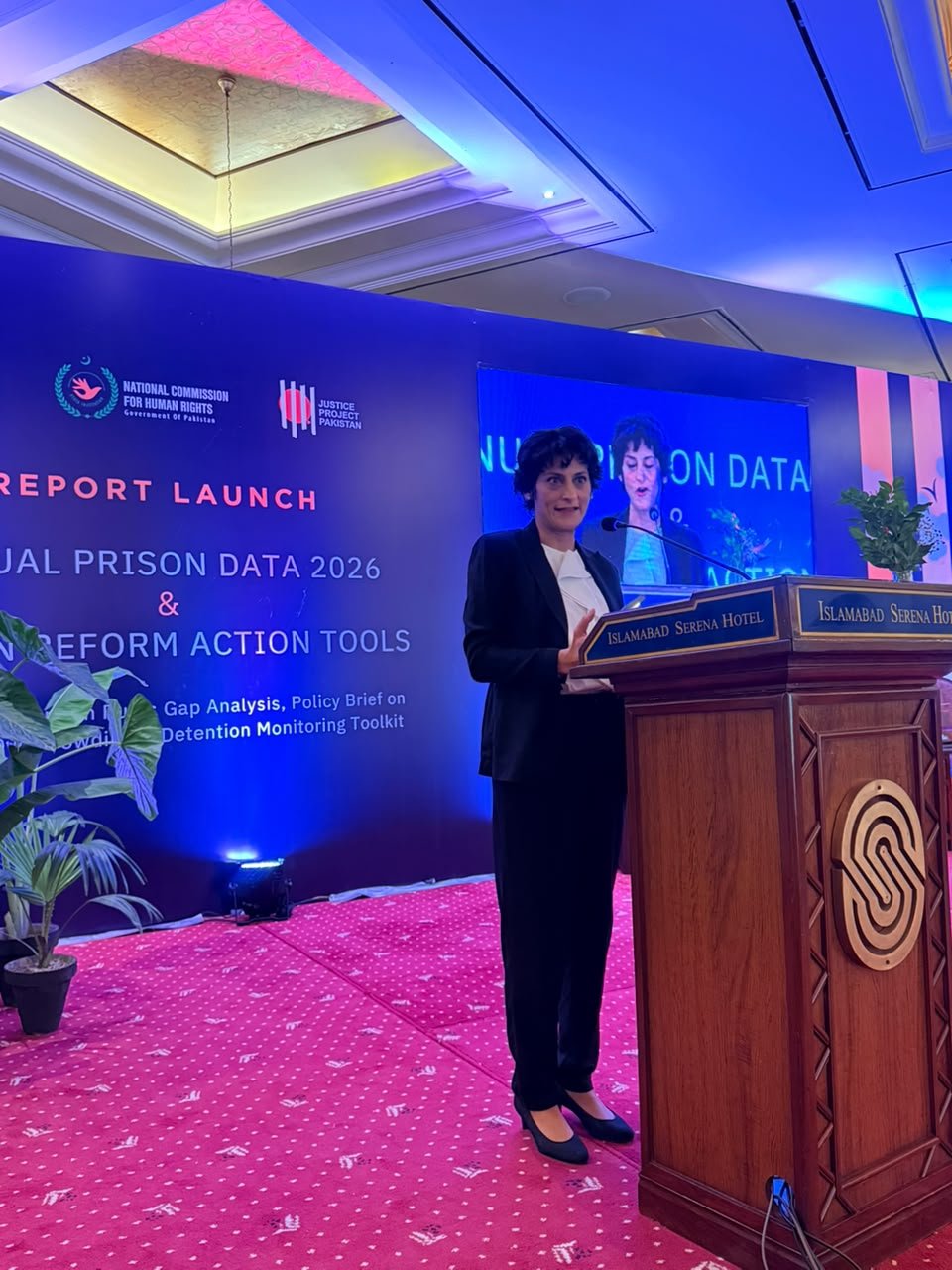
Speaking at the report’s launch, NCHR Chairperson Rabiya Javeri Agha said Pakistan did not simply have a prison overcrowding problem but a broader criminal justice problem, with people entering prison faster than the justice system could process them.
Sarah Belal, Executive Director of Justice Project Pakistan, emphasised that the figures represent individuals and families whose lives have been disrupted. Meanwhile, Jeroen Willems of the European Union Delegation in Pakistan highlighted initiatives to improve prison management, including information systems introduced in Balochistan and Khyber Pakhtunkhwa.
What Needs to Change?
The report calls for practical measures to address the underlying causes of the Pakistan prison crisis. Priorities include improving access to bail, reducing trial delays, expanding non-custodial sentences, strengthening prison oversight and reviewing laws and policies that contribute to unnecessary imprisonment.
The Annual Prisons Data Report 2026 provides policymakers, courts, researchers and oversight bodies with a national evidence base for these reforms.
Ultimately, tackling the Pakistan prison crisis requires more than expanding prison capacity. Timely trials, fair access to bail and proportionate alternatives to incarceration will be essential to reducing overcrowding and strengthening public confidence in the justice system.
Read the full report: Annual Prisons Data Report 2026 and Key Findings







[…] observers note that Uzbekistan under President Shavkat Mirziyoyev has emerged as a strong advocate for regional peace and has […]