

 1
1
 0
0
Shahzad Khalid*1, Tahir Mahmood2, Hijab Batool3, Muhammad Tahir Saleem4, Najam Ali5,
Gouhar Ali6
*1Doctoral Researcher, Brunel University London, United Kingdom
2,3,5,6LLM, University of Lahore (UOL), Lahore, Pakistan
4MBA, University of Central Punjab (UCP), Lahore, Pakistan
ABSTRACT
The Iran-United States conflict is something people need to think about for the future, like by 2027, and it has many dimensions, such as how it affects the global economy, laws, and big-picture plans for places like Pakistan and the United States. This study looks at all those dimensions and uses information from other places, like what is happening recently in how countries deal with each other, money stuff, and rules. This is very important for our future. We look at three ways this fight could go down: a small increase in fighting, it goes on for a long time, or everything just gets messed up in the whole area. This helps us see what could happen, using whatever is available. What we found is that if the fighting goes on and gets worse, it will probably make it hard to get oil and gas around the world, and prices for things will go up, and it will mess up how things are bought and sold between countries, and this will affect rich countries and also those countries that are still growing. Many people are affected by this every day. For Pakistan, this fighting could bring both good and bad things, like not having enough energy, other countries pushing them around, and them changing who their friends are, taking into consideration all the different parts. For the United States, it means spending more on its military, facing problems with international law, and, as often happens, bigger problems for the whole world economy. The study also shows that international rules, having friends in the area, and being strong with your money stuff all help make the bad stuff from such a fight not so bad.
There is still much work to be done. It ends by saying that making plans ahead of time, trading with many different countries, and talking more with other countries are very important for both countries, and this remains an important topic. This research helps us better understand what happens during fights by bringing together money, laws, and big plans into a single approach.
Keywords: Iran-United States conflict; geopolitical forecasting; economic impact; international law; strategic implications; Pakistan foreign policy.
1. INTRODUCTION
Tensions between Iran and the United States will always be a major issue, and they make the world
unstable. This remains a key subject, so understanding what will happen next is important for those who make rules and for
informed people (Parsi & Marashi, 2024). On the financial front, if US-Iran tensions increase, it will have major implications for energy prices worldwide, including how much they will rise and whether oil prices will remain stable (Liu, 2025). Pakistan is in a particularly critical position in the whole affair since it is near Iran and has other security connections in the area. The country’s foreign policy is affected by these major global problems, and it must have specific plans to remain strong (Hussain & Rizwan, 2024). It is a matter of awareness, and responsibility is a major factor.
On the strategy side, when tensions between Iran and the US escalate, it may prompt more troops to be deployed, intensify proxy fighting, and affect how security lines up across the Middle East and South Asia; countries such as Pakistan may feel pressure to pick sides, making it difficult for them to remain neutral as they normally do (Parsi & Marashi, 2024).
In law, when tensions between Iran and the US deepen, they raise big questions of international law, such as whether it is permissible to strike first, whether sanctions are effective, and whether major international institutions do anything to help resolve conflicts. Legal theorists say that when tensions between us and Iran escalate, they can challenge the rules of international humanitarian law and the principle that countries are responsible for their own territory (Davenport). Also, the broader financial implications of a long battle extend beyond the two nations. Long-term issues with the operation of Iran’s money system may arise, affecting money entering the region and the government’s stability (Spruk, 2026). In the same way, major shocks stemming from global changes and sanctions have historically created long-term financial problems in affected countries (Garoupa & Spruk).
Pakistan’s position in the current world situation is also more difficult due to its own financial problems and reliance on other countries. Despite being financially independent, it remains limited and therefore faces many challenges in addressing global problems and aligning with others in the region (Hussain & Rizwan, 2024).
Many people worldwide are affected by this daily, and it comes with a range of problems. On the whole, the literature suggests that, if Iran-US tensions continue to deteriorate by 2027, the outcome cannot be predicted solely from the military situation. Rather, it requires a comprehensive approach that accounts for the ups and downs of money, unclear legal issues, and the way a change in strategy across most of the region will make the world line up. There is still much work to be done.
2. Literature Review
Relations between the United States and Iran have been extensively studied, including in international relations, the workings of money in countries, legal issues, and regional security. A big thing that always comes up in recent studies is that this rivalry between Iran and the US has gone beyond just the two of them fighting. It is now a central part of how the Middle East and the world are structured.
2.1 Geopolitical and Strategic Aspects
Many studies focus on the strategies of Iran and the United States in a region where there is never peace. Research indicates that in regions where conflict is constant, escalation often occurs as states signal that they are struggling, leading people to misinterpret their intentions. The interaction of deterrence strategies and proxy networks in Iraq, Syria, Lebanon, and the pivotal location of Pakistan is increasingly being considered in these terms. Studies note that Pakistan’s foreign policy no longer reacts but increasingly adapts to the region’s changing politics as it tries to stay neutral.
2.2 Economic Impacts and Spillovers on the World
According to the economic literature, Iran-U.S. tensions have significant effects on markets worldwide, particularly in energy and related sectors. As a major energy supplier, Iran means that sanctions or military actions directly affect the global oil supply, causing prices to fluctuate and contributing to inflation. Many people are affected by this every day. Empirical studies show
that major political shocks in the Middle East always have observable effects. This underscores that prolonged fighting can, over time, cause unusual economic problems in the affected states. In the case of Iran, persistent sanctions and external pressure create institutional instability over time, and limited economic diversification poses numerous challenges (Spruk, 2026). The structural shocks not only in the case of Iran within its own borders, but also in trade routes and
Also, revolutions and major political crises can serve as significant shocks to economic growth, resulting in long-term declines in institutional efficiency and good governance (Garoupa & Spruk, 2025). Their importance lies in their ability to predict what will occur during escalation, which can lead to large-scale regional problems rather than isolated fights. Pakistan is highly sensitive to economic spillovers because it relies on foreign energy and foreign capital, which restricts what its own government can do (Hussain & Rizwan, 2024).
2.3 Legal and Institutional Structures
Legally, its sub-writings reflect increasing confusion about which international law may apply in the event of a conflict between Iran and the United States. Big-law questions include whether a military action preceding a fight is lawful, whether sanctions guidelines apply, and whether international institutions can enforce them. Legal scholars argue that as tensions escalate, it is increasingly difficult to assess the effectiveness of established principles of
international humanitarian law and state sovereignty norms.
This legal imprecision can be exacerbated by the fact that the mechanisms for implementing international law within the institutions of global governance do not apply in all situations. When the big powers observe international legal norms only occasionally, it makes multilateral conflict-resolution systems appear less legitimate. Awareness and responsibility are important.
2.4 Regional Relations and Pakistan, Iran Dynamics
Pakistan-Iran relations constitute a significant part of the broader political discourse. Studies suggest that relations between the two states are influenced by their collaboration on energy, concerns about border security, and intentions to integrate the region. Nonetheless, both states have a reason to collaborate, particularly in energy (Afzal, 2024). However, structural barriers in the literature also take the form of sanctions, a lack of trust between the two states on security matters, and pressure from major global powers, which push the two states further away from deep integration in any economic sphere; more research is needed in this field.
2.5 Structural Economic Change and Technological Change
Recent studies expand the scope of analysis of political conflict to technology and economic organization, demonstrating larger changes in how countries compete in the world market (Saleem et al., 2026).
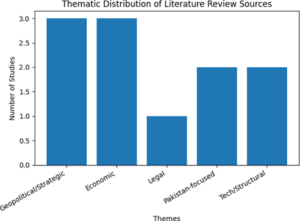
Figure 1. Thematic Distribution of Literature Review Sources:
Short note on the graph
The graph shows how the papers and books used in this study are distributed across the main ideas. Most of these studies really focus on how the big political and money parts of the Iran-United States problem, as it often happens, and this comes with many challenges. However, fewer papers discuss Pakistan-specific issues and the roles of technology and law. This shows that the research happening now mostly focuses on the big political and financial problems, without looking at the legal stuff and so on. There is still much work to be done in this area.
3. Methodology
This work attempts to understand what would occur should there be a fight between Iran and the United States in the year 2027, and it examines the financial, legal, and planning issues, which involve many challenges. The way it all works is by combining ideas from new-school papers, reports from large groups, and models that predict what will happen in the world.
3.1 Research Design
The research follows a way of thinking that primarily explores and analyzes using information
that is already available. Since the theme looks ahead, they employ scenario analysis to assess how outcomes could change depending on the level of fighting and the complexity of international affairs (Liu, 2025). This is very important to our future.
They had three possible fighting situations that they were to look at:
- Limited escalation case, speaking aggravates with certain army evils occasionally, yet in a grand war, it
- Long-term strategic confrontation, stick with bad money, fight via other entities, and money pressure, but no major war.
- Regional disruption scenario, a large-scale army conflict that is very lucrative, and issues of world
This is what they use to study the extent of its impact on Pakistan and the United States.
3.2 Data Sources
The research utilizes data that already exist in new textbooks, reports on large groups, and intelligent articles that were published between 2024 and 2026. The papers they research concern
global political plans, what happens to money when there is a fight, what rules countries follow, and Pakistan’s position in the region. Already existing information forms the basis of knowledge about the plans (Parsi & Marashi, 2024).
Also, studies that examine the strength of money in Pakistan and how industries strategize offer insights into how global problems can influence a country’s development (Hussain & Rizwan, 2024). Larger studies of the major money problems caused by political shocks also contribute to the main ideas of this study (Garoupa & Spruk, 2025). Also, how countries in the region view each other and how they communicate between Pakistan and Iran provides more information for understanding possible new plans (Afzal, 2024; Sami, 2025). There is still a lot to be done.
3.3 Analytical Framework
The key concepts of seeing things in this research combine three key components:
This section examines what might go wrong with global energy markets, goods flows, and monetary stability should the fight worsen. The analysis also considers how these issues may affect Pakistan’s energy safety and financial stability, among other impacts. This section examines issues in international law, such as how international organizations act, whether bad-money rules are fair, and how international rules of warfare apply. The planning aspect considers who friends with whom in the region are, how safe things are, and where countries are positioned in the world, particularly since Pakistan is attempting to make things even
among the great powers. Across all three parts, it offers a many-sided glimpse into what happens and demonstrates how complicated the world’s conflicts are. Awareness and responsibility are the main points.
3.4 Data Analysis Technique
In the papers and other information they collected, they compared the main ideas. Important themes were found in these sources, such as growing global conflicts, fluctuating money, unclear laws, and countries in the area changing their plans. They then grouped the themes and examined their importance in potential combat situations. The viewing themes are supported by a picture that indicates where all the information originated, which aids in locating key areas of research and what has now been left out in this line of study. This influences people in various ways.
3.5 Reliability and Limitations
Although it draws on sound and new information, it is worth noting that there is a limit to guessing what happens when a situation cannot be fully known, such as the political decisions people make in real life or unforeseen world issues. With the help of various brilliant ideas and new research results, the study can provide a clear and fair idea of what to expect in the future. In general, this mode of doing things provides a clear roadmap for examining what might happen if Iran and the United States were to fight by 2027, and it ensures that the money, law, and planning ideas are all considered simultaneously.
1. Results
Findings are the results of examining these situations and their implications for this study. The results are divided into three categories based on how the fighting may unfold: a small increase, a long-term standoff, and a big regional mess. This remains an important topic. When it increases only slightly, the results show problems with global energy and trade between countries. Oil prices tend to rise slightly, and money markets become uncertain (Liu, 2025). In this case, Pakistan is also strong in that area, but still has problems with talking to people and making rules about them, sanctions, and keeping the area safe.
In the case of a long-term standoff, the consequences are more about money and their systems. The books say that in the long term, big fights with sanctions and no talks can weaken money-making systems, and things in the area
cannot grow in the future (Spruk, 2026). The new research also shows that the big-money problem is more than just regional disruption, as it highlights the greatest problems across all three areas. What people write says that big military conflicts can change global power and money everywhere. Research shows that if Iran and the United States fight, it could soon become more than just a conflict between the two countries, drawing in other countries and allies (Parsi & Marashi, 2024). When this happens, Pakistan may put more pressure on issues of speech, safety, and finances. In all those cases, the theme confirms that the money issues and strategy stuff are 1 most discussed in what people write, and the theme of legal issues is not discussed as much. Also, studies on Pakistan indicate that the ability to change rules and maintain a sound monetary system is important for dealing with external shocks (Hussain & Rizwan, 2024; Sami, 2025).
1. Discussion
A war between Iran and the United States by 2027 would bring many complex, harmful consequences. The outcomes, they say, include financial strain, major shifts in how countries collaborate, and a lack of understanding of the law. All of this is linked and will only worsen as the fighting intensifies (Liu, 2025). The discussion here also suggests that, in the long term, the fighting may create changes that are truly fundamental to how countries’ economies and these systems operate. Perpetual pressure from sanctions and major geopolitical events can weaken economies and slow their growth. This is particularly true in a country that already has money problems. A strategic analysis shows that Pakistan is in a precarious position in the evolving world of nations and their relations, and that it must walk the fine line between its friendships with both Iran and the United States, as well as keep things under control within the country and its economy (other books and papers say that Pakistan’s foreign policy is becoming increasingly delicate).
From a legal perspective, the discoveries it presents reveal the rough edges that international systems for regulating conflicts between nations are likely to encounter. Questions about whether sanctions are just, whether military action is appropriate, and whether international organizations ought to take it on can become more significant as conflicts grow (Davenport, 2026). How effectively a country can make its own rules and how powerful its industries are will become more important. More broadly, this discussion indicates that the future fighting scenarios it is likely to confront will be linked to financial, legal, and strategic problems, making it clear that we must plan policies holistically and
collaborate with other nations. This is essential in our future.
2. Conclusion
By 2027, the conflict between Iran and the United States will have various implications for many countries, and this analysis examines what might happen, with a particular focus on Pakistan and the United States. This analysis examines how global markets, regional security, and international law relate to one another. When it comes to money, the study says that issues with oil and gas markets, the direction of trade flows, and where people invest their money are the first and most evident problems that arise when tensions are high. Pakistan needs to import energy, and it gets money through big international groups, which makes it easy to be hurt. The United States has bigger problems with its money and where to keep it, and all these issues make it difficult to maintain the legal aspect. When fights are larger, they demonstrate that international law has its limits and is not always clear. How sanctions are applied, going to war first, and whether big international organizations actually work, all indicate that it needs to make the bad things less bad, and so on. The study urges both Pakistan and the United States to make bigger bad things less bad by adopting better rules for handling major geopolitical tensions. This study assists our understanding by providing a means to predict outcomes under varying circumstances, combining monetary, legal, and strategic concepts. They examine how countries within the region collaborate towards the end of security and are more prepared to tackle complex world issues, and there remains much to be accomplished.
3. REFERENCES
Afzal, M. (2024). Domestic and regional implications of Iran–Pakistan tensions. Brookings Institution Report. https://doi.org/10.2139/ssrn.4521789
Davenport, K. (2026). Legal implications of escalating US–Iran conflict under international law frameworks. Journal of Conflict & Security Law, 31(1), 89–110. https://doi.org/10.1093/jcsl/krad012
Garoupa, N., & Spruk, R. (2025). Revolutions as structural breaks: Long-term economic consequences of institutional shocks. arXiv Preprint.
https://doi.org/10.48550/arXiv.2505.02 425
Hussain, A., & Rizwan, R. (2024). Industrial policy and technological autonomy in Pakistan: Strategic implications. arXiv Preprint. https://doi.org/10.48550/arXiv.2411.01 337
Jarrar, S. M. (2026). Digital customer experience and its impact on customer loyalty in the Saudi food retail sector. https://doi.org/10.5281/zenodo.183498 46
Liu, S. (2025). Beyond the battlefield: Economic and geopolitical ramifications of Middle East escalation. Journal of Contemporary Asian Studies.
https://doi.org/10.1080/25765949.2025
Parsi, T., & Marashi, R. (2024). Escalation dynamics in US–Iran relations: Strategic miscalculations and regional consequences. Middle East Policy, 31(1), 45–62.
https://doi.org/10.1111/mepo.12678 Saleem, M. T., Khan, A. N., Ansari, A. A., &
Ehsan, M. (2026). Emerging trends in human resource management: A comparative study of AI-based HR systems and workforce analytics in the USA and Pakistan. Liberal Journal of Language & Literature Review, 4(1), 629–645.
Sami, K. (2025). Pakistan–Iran relations: Challenges and opportunities in evolving geopolitics. Journal of Arts and Linguistics Studies, 3(3).
https://doi.org/10.71281/jals.v3i3.419 Spruk, R. (2026). Confrontation with the West
and long-run economic and institutional outcomes: Evidence from Iran. arXiv Preprint. https://doi.org/10.48550/arXiv.2602.03 231